


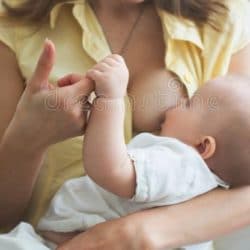
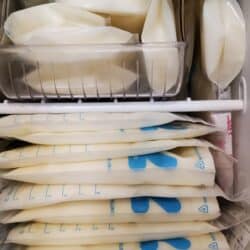
I imagine all these moms out there, sitting on their couches breastfeeding their babies, wondering what they can do to celebrate Earth Day. Sometimes it’s hard enough just to get off the couch let alone go and pick up garbage around your neighbourhood or hike into the wilderness to plant a tree. Well, I am letting you off easy this year because the simple act of breastfeeding is one of the best things you can do for the Earth.
The following article was originally posted January 12, 2009 when my little blog was just getting underway. I have adapted it slightly since then, and I hope you will find it informative.
Nurse The Earth
Breastfeeding is one of the most excellent lifestyle choices that contribute to the health of our environment, yet I am sure it is overlooked for its ecological and evolutionary significance to our species by all facets of human society on a regular basis. If it weren’t, I am sure our health professionals would take breastfeeding education more seriously and more families would choose to breastfeed and breastfeed longer. According to Parenting Web, breastfeeding is actually the most ecological food sources for humans. Let’s take a look at why.
First of all, it’s completely natural. Breast milk is a whole food. It has not been processed or added to in any way. In fact breast milk is nature’s perfect food for babies. Even when moms are exposed to toxic substances, like smoking, for instance, breast milk is still recommended as the optimal food. We are mammals, and mammals feed their offspring with their mammary glands. Killer whales, lions, donkeys and chimpanzees all breastfeed without supplementation. Indeed without breastfeeding the human species would be extinct.
With the safety of infant formula often coming under scrutiny, the benefits of breastfeeding become far-reaching. Breast milk is never contaminated. Breast milk has never been recalled. However, in a study that tested Bisophenol A (BPA) levels in canned food, including infant formula, the Environmental Working Group found that one of three cans of infant formula tested contained BPA. “The exposure that an infant might receive from canned formula, given his or her small size and limited food sources, makes the level of contamination in these cans particularly disturbing… In fact, a single serving [of formula] contained enough BPA to expose an infant to BPA levels more than 200 times the government’s traditional safe level of exposure for industrial chemicals.”
Industrial chemicals in our bodies, industrial chemicals in the air.
The production and packaging of formula uses natural resources (to manufacture, transport and dispose of it) and takes up landfill space, all of which contribute to climate change.
“If every child in America were bottle-fed, almost 86,000 tons of tin would be needed to produce 550 million cans for one year’s worth of formula. If every mother in the Great Britain breastfed, 3000 tons of paper (used for formula labels) would be saved in a year. But the formula is not the only problem. Bottles and nipples require plastic, glass, rubber, and silicon; production of these materials can be resource-intensive and often leads to end-products that are not-recyclable. All these products use natural resources, cause pollution in their manufacture and distribution, and create trash in their packaging, promotion, and disposal. ” – From Mother Nature Loves Breastmilk, by Dia Michels
In addition, Parenting Web points out that
“These materials are rarely recycled and the two most common disposal methods, landfill and incineration, both contribute greatly to pollution. Plastic feeding bottles and nipples will take 200 to 450 years to break down and it is impossible to determine the amount of time it takes for glass feeding bottles to break down. Landfill sites are hard to come by in many countries and they can pollute groundwater. Incineration releases pollutants into the air. The fumes from burned plastic can contain dioxin and other toxic substances.”
Most formulas are soy or dairy-based. The dairy industry reek havoc on the environment on a daily basis. Trees need to be cut down in order to grow ongoing crops for cattle, the crops need to be fertilized which leaches nutrients from the soil and pollutes ground water. The pollution that cattle flatulence creates, as 100 million tons of methane is released into the atmosphere each year, approximately 20% of the earth’s emissions, is staggering! It is much easier to place our blame on the automobile industry than give up meat and dairy isn’t it? But I digress. Soy-based formulas aren’t much better as soybean crops require a great deal of fertilizers and water too.
Bottle feeding requires a significantly high amount of water and energy. Bottles must be washed and sterilized and formula warmed to the correct temperature. Breastfeeding, on the other hand requires none of this. Breasts are naturally sterilized with breast milk, which also happens to be the perfect temperature. In addition, exclusively breastfed babies do not need to drink water when they are thirsty. Breast milk is all they need.
Armed with this information and the planetary emergency at hand, moms who have a choice in whether to breastfeed or bottlefeed are left with little room to argue for the bottle feeding side.
As Mothering Magazine states,
“Breastfeeding is not just a lifestyle choice; it is a health issue for mother and infant, a social issue, and an environmental issue…Because of the far-reaching positive ecological, health, and social impact breastfeeding can make on our planet, it is imperative for anyone interested in protecting our children and our environment to do whatever possible to support, protect, and promote breastfeeding.”
How else does breastfeeding benefit a healthy environment? Has this post been helpful to you in any way? I welcome your feedback.
Related posts:
- Nurse the Earth
- Do Hormones Really Account for a Mom’s Ability to Breastfeed??
- Monday Musings: Why Do So Many Women Living in Poverty Not Breastfeed??
- Monday Musings: Were You Breastfed?
- Monday Musings: How Hospitals Contribute to Lower Breastfeeding Rates
Tags: bottle feeding, Earth Day, formula


pass me a nursling!
I love touting the environmental benefits of breast milk. As an aspiring locavore I have to say, you can’t get better than just lifting your shirt.
Let’s not forget, as well, that there is an environmental impact when people (including babies) get sick. Hospitals use a lot of energy and create a lot of waste. So when breastfed babies have fewer illnesses, that benefits the earth as well.
Amber’s last blog post..But it’s Educational!
Wooo-hoooo! I am an earth day hero! lol!
All joking aside, I love this post, because bfing is so awesome for things like reducing waste and wasted energy! Bfing is so sustainable
flowers’s last blog post..Yee-haw, Let’s Go to…….
I have never read a post that informative about how green breastfeeding is. I love it !
Great post! And I was actually sitting here thinking, what will I do for Earth Day, and what will I write about?! Duh, breastfeeing is the greenest thing I do and didn’t even think about it
Rachael’s last blog post..How you know it is REALLY time to lose weight
[...] Momzelle Nursing Wear Review Hello there! Welcome to Breastfeeding Moms Unite! If you are new here, you might want to subscribe to my RSS feed. I hope you enjoy your visit today and come back soon!I was so excited to discover Momzelle Nursing Wear. As soon as you get on the site you can tell you are dealing with a proudly ethical and green company that is not only dedicated to breastfeeding support and education, but environmental awareness and education as well, which are two issues very close to my own heart. As such, I am pleased to make this review my official Earth Day post. To read my other Earth Day post, go here. [...]
I love the fact that you talked about how the chemicals in infant formulas can pose risk to babies and how it affects our environment. Breastfeeding is really the way to go!
Hi, nice post. I have been thinking about this topic,so thanks for sharing. I’ll definitely be subscribing to your posts.
[...] More crunchy than breastfeeding a toddler? Babywearing? Bed sharing? Being vegetarian? Wanting to save the Earth? Wearing handmade clothes from Etsy? (All of which we agree on by the [...]