
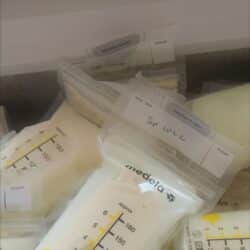


As many of you will remember I recently did a number of product reviews for Lansinoh. In the middle of it I found out that Lansinoh is owned by Pigeon, a maker of baby products, including bottles and nipples, who has been found guilty of breaking the WHO Code.
Since Lansinoh is a company that specifially designs products for breastfeeding mothers and breastfed babies, I felt that there was a conflict of interest, and I wanted my readers to be able to make informed choices regarding the purchase of Lansinoh products. I wrote a piece called Lansinoh and Their WHO Code Violating Pigeon that included many links for readers to come to their own conclusions about their feelings about Lansinoh being owned by this corporation.
On August 3, 2009 Gina Ciagne, the director for breastfeeding and consumer relations for Lansinoh and a certified lactation counselor, posted a response to ongoing concerns about Lansinoh’s WHO Code status on Lansinoh’s blog By Moms For Moms (click the blog link to read it). Gina says,
You may have heard differing stories about whether Lansinoh complies with the International Code of Marketing of Breast-Milk Substitutes (also known as the “WHO Code”), which was developed by the World Health Organization to set guidelines for the marketing of infant feeding products and products that have the potential to undermine breastfeeding. Lansinoh neither manufactures nor markets any of the four product-types that are covered by the WHO Code and has always been a strong proponent and supporter of the Code.
Because the WHO Code examines the marketing of the four product types and Lansinoh is in compliance of this, Lansinoh is in compliance of the WHO Code. Furthermore, she makes the point that ownership of companies is not something that the WHO Code examines. Because of this fact, in August 2009 at their annual conference, the International Lactation Consultant Association (ILCA) agreed that Lansinoh could exhibit at their conference, thus taking the position that Lansinoh is not a WHO Code violator.
However, despite the fact that Lansinoh by itself does not violate the Code, some people may still have concerns that Lansinoh permitted itself to be owned by one of the world’s worst WHO Code violators in the first place. While ownership of companies isn’t a requirement to comply with the Code, perhaps it should be. Because I am still having a hard time feeling good about this.
Perhaps we should focus on the fact that when we buy a Lansinoh product, Pigeon gains from the sale.
Also, Gina makes the statement in her response that Pigeon owns the “majority” of Lansinoh shares, even though Pigeon’s 2004 annual report (see page 4) describes Lansinoh as a “wholly owned subsidary.” If Pigeon now only owns the majority of shares, who owns the minority? This might appear to be a trite piece of information, but saying Pigeon is a majority shareholder is misleading if they actually own and thus control the entire company. Which means a giant like Pigeon isn’t going to easily be swayed by Lansinoh’s attempt “[to do] everything we can to try to influence those who are not in accordance.”
What do you think? Do you have any ongoing concerns or are you satisfied with Lansinoh’s response?
Related posts:


You are asking the same question I did in a comment to Lansinoh’s blog post – a comment to which there has been no response. This statement by Lansinoh that Pigeon is a “majority shareholder” is misleading if Lansinoh is, as Pigeon asserts in its own annual report, a “wholly owned subsidiary.” “Wholly owned” means 100%. There are no minority shareholders. There are no other shareholders at all. According to Pigeon, it owns Lansinoh entirely and Lansinoh is Pigeon’s presence in the United States. If this is incorrect and Pigeon misrepresented its ownership of Lansinoh, I’d welcome some evidence of that from Lansinoh.
Adopting ILCA’s reasoning does not alter the legal reality. ILCA drew an imaginary line: “WHO Code supporters are not required to make an analysis of corporate ownership beyond the direct marketer of the four product-types.” The WHO Code does not refer to “supporters” at all so that statement is empty – “supporters” have only the obligations “supporters” decide they have. The WHO Code describes conduct and that conduct is performed by manufacturers, distributors, marketers, marketing personnel, health care workers, and health care systems. See http://www.who.int/nutrition/p.....nglish.pdf for a full text of the WHO Code. “Distributor” is defined as “a person, corporation or any other entity in the public or private sector engaged in the business (whether directly or
indirectly) of marketing at the wholesale or retail level a product within the scope of this Code.” A “manufacturer” is defined as “a corporation or other entity in the public or private sector engaged in the business or function (whether directly or through an agent or through an entity controlled
by or under contract with it) of manufacturing a product within the scope of this Code.”
There is no dispute that Pigeon is a WHO Code violator. The operation of a wholly owned subsidiary is ultimately controlled by the owner/parent corporation. The owner is responsible for the debts and obligations of the wholly owned subsidiary. Under U.S. anti-trust law, a wholly owned subsidiary and the parent company can not be found to conspire with each other because they are considered one entity.
Individuals and organizations in the United States have the legal freedom to decide for themselves whether they will support the WHO Code by refusing to do business with entities that violate the Code. However, I am deeply offended by misrepresenting the ownership status of companies – it is by knowing who owns the companies with which I do business that I decide how I will support the Code. From Pigeon’s corporate statements, I learn that by doing business with Lansinoh, I do business with Pigeon.
That was one thing I realized, while nursing my daughter to sleep this afternoon, that I omitted from my post. The fact that no matter how compliant Lansinoh and their products are to the code, the MAIN ISSUE is when I buy a Lansinoh product, Pigeon gains from the sale. Do I want to support Lansinoh? Yes, I’d like to because their products are fabulous, but I don’t want support Pigeon in that transaction, and yet that’s exactly what I am doing. Ugh!
But lansinoh, the brand not being a violator does not mean that buying their products isn’t supporting a violator. Last time I checked, profit flows uphill.
Okay, I’m updating my post to reflect my commet so it doesn’t get missed.
Right, Slee. Nestle makes chocolate that doesn’t violate the Code. Or, another perhaps more parallel example, Nestle wholly owns companies we in the US do not immediately recognize as being Nestle. See this site for Purina: http://www.purina.com/company/History.aspx . Buy Purina dog food, enrich Nestle.
Thank you Melodie and thank you Jake for all this information. I have so much to learn about all of this and you’ve done my research for me. I need to digest and understand before I question. I have always been under the impression that the uphill profit flow means that all those under the umbrella of the parent company who is noncompliant with the code would be included in a boycott.
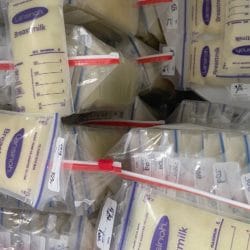
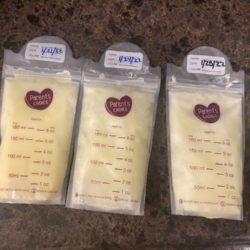
I spent a lot of money on Lanisoh products when I was pumping last year. They make (in my opinion) the best milk storage bags/bottles on the market, and I went through those things like hot cakes.
But if I had known that a penny of those purchases went to support a WHO code violator, I would have found another product. Hygeia makes the same type of product for around the same price, with no violation. I think the choice is clear. There is no reason to support a company who violates the WHO code, and there is certainly no excuse for them trying to hide or downplay their affiliation. Not cool.
@Melodie, I wanted to take a moment to respond to the issue you and your followers have risen. First, I would like to thank you for your educational reviews and great things you’ve said about Lansinoh products. We focus solely on supporting the needs of fellow breastfeeding mothers, and find it rewarding that so many take the time to say nice things about our products and how they have aided the nursing process.
Also, it’s important to reiterate that Lansinoh fully complies with World Health Organization’s code of conduct (WHO Code) for marketing products to nursing moms. A recent review of Lansinoh by The International Lactation Consultant Association (ILCA) confirmed our compliance, and we are proud of our commitment to this standard.
Lansinoh was founded by a nursing mom in 1984, and acquired by Pigeon in 2004. However, Lansinoh is an independent subsidiary of Pigeon and operates with separate management and corporate governance that assures full compliance with WHO standards. We’ve recently clarified our corporate statement on this topic on our sponsored blog: http://bymomsformoms.blogspot......de-on.html. If anyone has any questions, feel free to contact me at gciagne@lansinoh.com.
Gina Ciagne, CLC
Director of Breastfeeding and Consumer Relations
Lansinoh Laboratories
http://bymomsformoms.net
@GinaAtLansinoh
[...] with its provisions. Some do so voluntarily. Some pretend that they do, but instead blatantly lie, do not fully disclose ownership, or make other choices that compromise their compliance. Others just don’t care at all about [...]
[...] provisions. Some do so voluntarily. Some pretend that they do, but instead blatantly lie (Nestle), do not fully disclose ownership (Lanisoh), or make other choices that compromise their compliance. Others just don’t care at all about [...]
[...] Consultant Association) has deemed Lanisnoh’s products kosher; however, for the really ultra-orthodox among the lactofanatics, this isn’t quite enough. One might even think this is less about [...]